
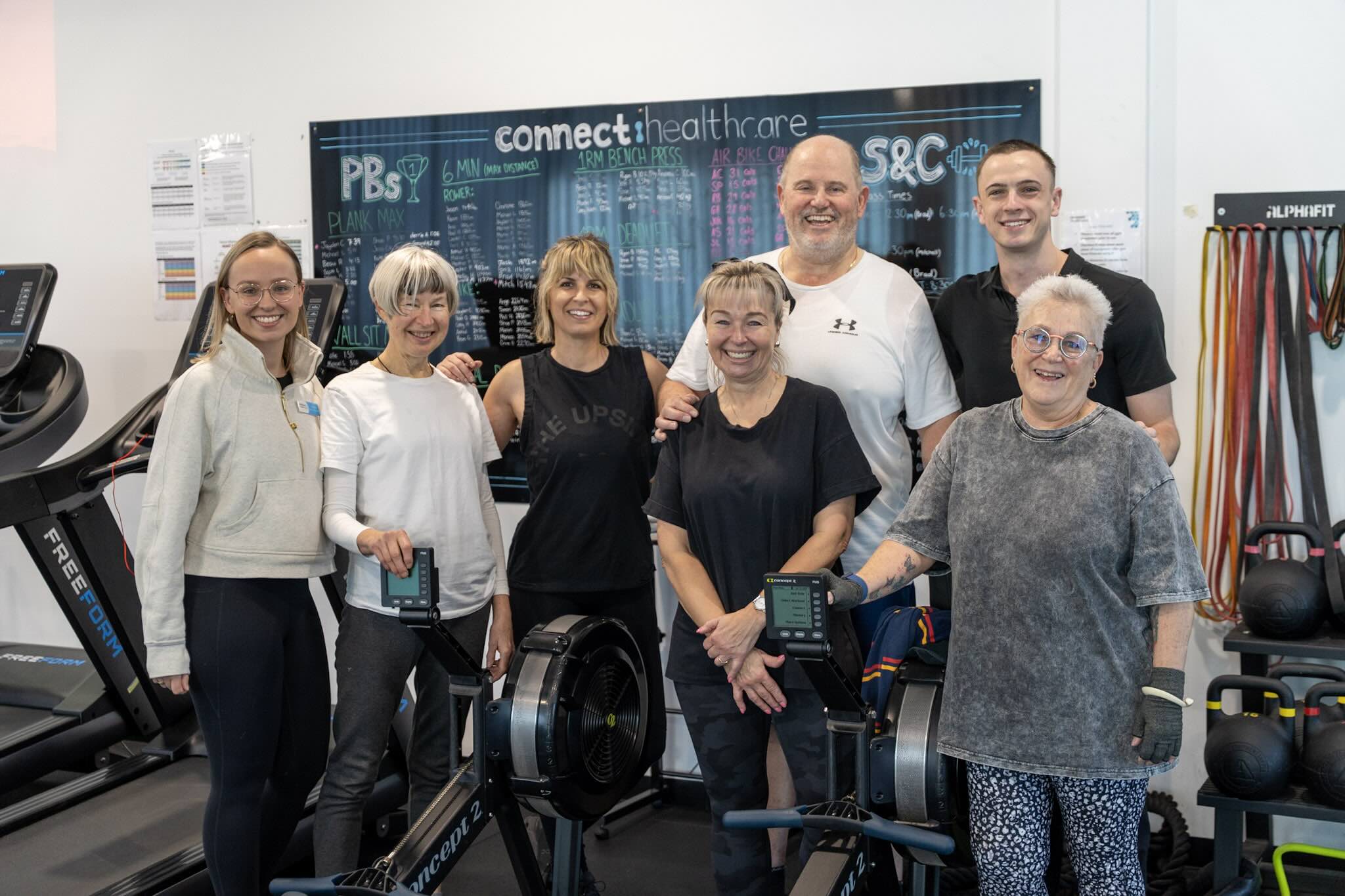
You walk into an integrated health clinic for the first time, unsure of where to start. Your back has been aching for months, your posture isn’t what it used to be, and you’re worried about how this will affect your work and hobbies. You’ve heard about chiropractors, physiotherapists and exercise physiologists, but you’re not quite sure what each one does or how they might work together for you.
At Connect Healthcare, we bring these different but related professions together under one roof. This interdisciplinary team approach can create a coordinated care plan that supports your health from multiple angles, without you having to juggle separate clinics or repeat your story over and over to each new provider.
Many skills, one goal
Imagine listening to a solo violinist or cellist. The music is beautiful and, sometimes, it’s all you need to lift your spirits.
But now imagine listening to a full orchestra. The strings carry the melody, warm and flowing. The percussion keeps a steady beat, holding everything together. Brass instruments rise and fall, adding bursts of energy, while woodwinds weave gentle harmonies that fill the spaces in between. Each section plays its own part, but they’re listening to one another, maintaining time and adjusting volume and tone to create a rich and profoundly moving experience.
To some extent, this is what it’s like when different allied health professionals work together. Each has their own skillset, honed through years of university study and professional practice. When they work together, they can create a coordinated client-centred care experience that’s responsive, thorough and easy to navigate.
Let’s take a look at each role in more detail.
The chiropractor’s role
A chiropractor focuses on assessing and managing your neuro-musculoskeletal system. They may use hands-on techniques to improve mobility, address discomfort, and support healthy movement patterns.
The physiotherapist’s role
A physiotherapist takes a broad view of movement and function. They assess how your muscles, joints, and nerves are working together, and design treatment programs that can include manual therapy, at-home exercises and education.
If you’ve sustained an injury, have a chronic condition or are recovering from surgery, a physiotherapist, chiropractor and exercise physiologist can all be key members of your healthcare team.
The exercise physiologist’s role
Accredited exercise physiologists (AEPs) are trained to deliver clinical exercise interventions for people with a broad range of health concerns or injuries – or those at risk of developing them.
These exercise-based interventions may include:
- Education on health and physical activity
- Advice and support
- Lifestyle modification.
AEPs understand that lifestyle change isn’t always easy. They’re trained to help you unlock your motivation so you can make sustainable behavioural change.
The extended team
Alongside these core practitioners, Connect Healthcare’s multi-disciplinary team includes professionals such as:
- Our dietitian who offers personalised nutrition advice to support your chronic condition management or performance goals.
- Our podiatrist who focuses on the health and function of your feet, which can influence posture, balance, and movement.
- Our remedial massage therapists who may help to relieve muscle tension, improve circulation, and support recovery.
Together, they strengthen our clinic’s ability to provide holistic client care that addresses your health from multiple angles.
Many parts, one whole
At an interdisciplinary health clinic like Connect Healthcare, the multi-disciplinary team shares insights, updates and progress notes. If you’ve sustained an injury, have a chronic condition or are recovering from surgery, a physiotherapist, chiropractor and exercise physiologist can all be key members of your healthcare team, all under one roof.
This means your chiropractor knows what exercises your physiotherapist has prescribed. Your physiotherapist understands the adjustments your chiropractor has made. And your exercise physiologist is aware of both, so they can build a program that complements your current care.
The result? A holistic assessment that sees you as a whole person, not a collection of unrelated symptoms.
Why this matters for chronic condition management
If you’re living with a long-term health issue, you know that progress isn’t just about one appointment – it’s about consistent, informed and adaptable care.
In a client-centred care model, your needs and preferences shape your coordinated care plan. This might mean starting with a holistic assessment from the physiotherapist, seeing the chiropractor for targeted joint and spinal care, and then working with the exercise physiologist to build lasting strength and mobility.
For many people, this approach:
- Reduces the need to explain your history multiple times
- Stops you feeling overwhelmed by too many appointments or at-home exercises
- Helps you feel supported by a team that’s genuinely on the same page, working towards the same shared goal.
The Connect Healthcare experience
At Connect Healthcare, holistic client care isn’t a slogan; it’s a daily practice. From your first assessment, you’ll see how each profession plays its part in your health journey. Whether your goal is to recover from injury, manage a chronic condition, or simply move more comfortably, we’re here to guide you with a blend of skill, empathy, and evidence-based care.
Disclaimer
All information is general and not intended as a substitute for professional advice.